More States Are Pushing Back on Prediction Markets
 By John Isaac,
Editor at online-gambling.com
John Isaac
Editor at online-gambling.com 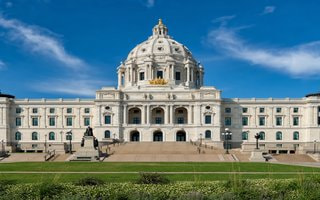 A rebellion is quietly forming across America’s statehouses. From the upper Midwest to the Bluegrass State, lawmakers and law enforcement officials are moving aggressively to block or restrict prediction markets. The pushback puts them on a direct collision course with the Trump administration’s federal regulators, who have signaled strong support for the industry.
Minnesota Takes the Toughest Stance So Far
Minnesota’s legislature passed SF 4760 last week, a sweeping omnibus public safety bill that buried within it one of the most aggressive crackdowns on prediction markets in the country. It passed the Senate 57-9 and the House 100-32, with provisions set to take effect on August 1, 2026. The law is now pending the governor’s signature.
If signed by Minnesota’s governor, the bill will make it a felony not just to operate a prediction market platform, but to facilitate one in nearly any capacity, including processing payments, providing location data, verifying event outcomes, or even advertising the services. Under SF 4760, prediction markets are broadly defined to cover wagers on athletic events, elections, legal proceedings, public health crises, wars and assassinations, and even whether a specific individual will make a particular statement.
This, however, will put Minnesota in a direct conflict with the current US administration. The Commodity Futures Trading Commission has already sued Arizona, Connecticut, Illinois, New York, and Wisconsin after those states moved against prediction market operators such as Polymarket and Kalshi, arguing that federal law grants it exclusive jurisdiction. Reports suggest the CFTC is already monitoring the situation in Minnesota.
Kentucky Braces For Its Own Legal Battle
Minnesota is not alone. In Kentucky, Jonathan Rabinowitz, chairman of the state’s Horse Racing and Gaming Corporation, told fellow board members Tuesday that he expects the state’s attorney general, Russell Coleman, to take action against prediction market operators within months. Coleman has already joined 39 other state attorneys general in writing to the CFTC, urging the agency to keep sports betting regulation in the hands of states.
What triggered this response from Kentucky? Just weeks ago, Polymarket briefly offered contracts on the outcome of the Kentucky Derby before Churchill Downs, the race’s iconic host, stepped in and demanded the market be removed. Kentucky’s legislature has already passed a ban on state-licensed sportsbooks offering prediction market products and imposing a 14.25 per cent tax on prediction market operators’ adjusted revenue (the same as for sports betting).
What’s the Problem with Prediction Markets?
Essentially, the question is this: are prediction markets a form of gambling, or are they federally regulated commodity contracts? Operators like Kalshi and Polymarket argue the latter, pointing to federal court victories that have allowed them to offer contracts on elections and political events. CFTC Chairman Michael Selig, a Trump appointee, has been an open advocate of expanding into sports.
States, meanwhile, see it differently, and they also see dollars leaving their regulated, tax-generating casino and sportsbook industries. The battle is no longer a quiet regulatory dispute. It is becoming, piece by piece, a defining legal war over who controls the ever-growing American gambling industry in the digital age. Currently, the outcome of this war remains unclear.
Related Posts

 PAGCOR to Launch App Steering Players to Licensed Gaming Sites
 Top 10 New Slot Releases August 2026: Stompin' Gold, Viking Runecraft 1000, Gates of Olympus POP & More
 US Gamblers Face Tax on Losses Under New IRS Rule
 Top 10 New Slot Releases July 2026: The Dog House Megaways 1000, Luxor of Cleopatra, Supreme Zeus & More
 Netherlands Plans Near-Total Gambling Ad and Bonus Ban
 New Jersey DGE Fines Caesars Sportsbook
 Caesars Reveals Plans to Open a Temporary Casino by July Next Year
 Seminole Tribe of Florida Files Replies in the United States Court of Appeals for the District of Columbia
 Hollywood Casino Riverboats to Be Moved Inland